

Note! This guide is for developers who are setting up OpenHome on their own Raspberry Pi and do not have a DevKit sent by OpenHome.
Prerequisites
Before starting, ensure you have the following:- Raspberry Pi (Zero 2 W, Pi 4, or Pi 5)
- SD card (8GB minimum)
- USB card reader or adapter
- Your Pi’s recommended charger
- Bluetooth speaker
- USB microphone
- Computer with internet access
Step 1: Download Required Software
-
Download Raspberry Pi Imager
- Visit the official Raspberry Pi Imager website.
- Download the version for your operating system (Windows, macOS, or Linux).
-
Install Raspberry Pi Imager
- Follow the installer prompts for your operating system.
- Download OpenHome DevKit OS
- Download the OpenHome DevKit OS image from here.
Step 2: Burn the OpenHome Image to the SD Card
-
Insert the SD card
- Insert your SD card into the USB card reader or adapter and connect it to your computer.
-
Open Raspberry Pi Imager
- Launch the Raspberry Pi Imager application.
-
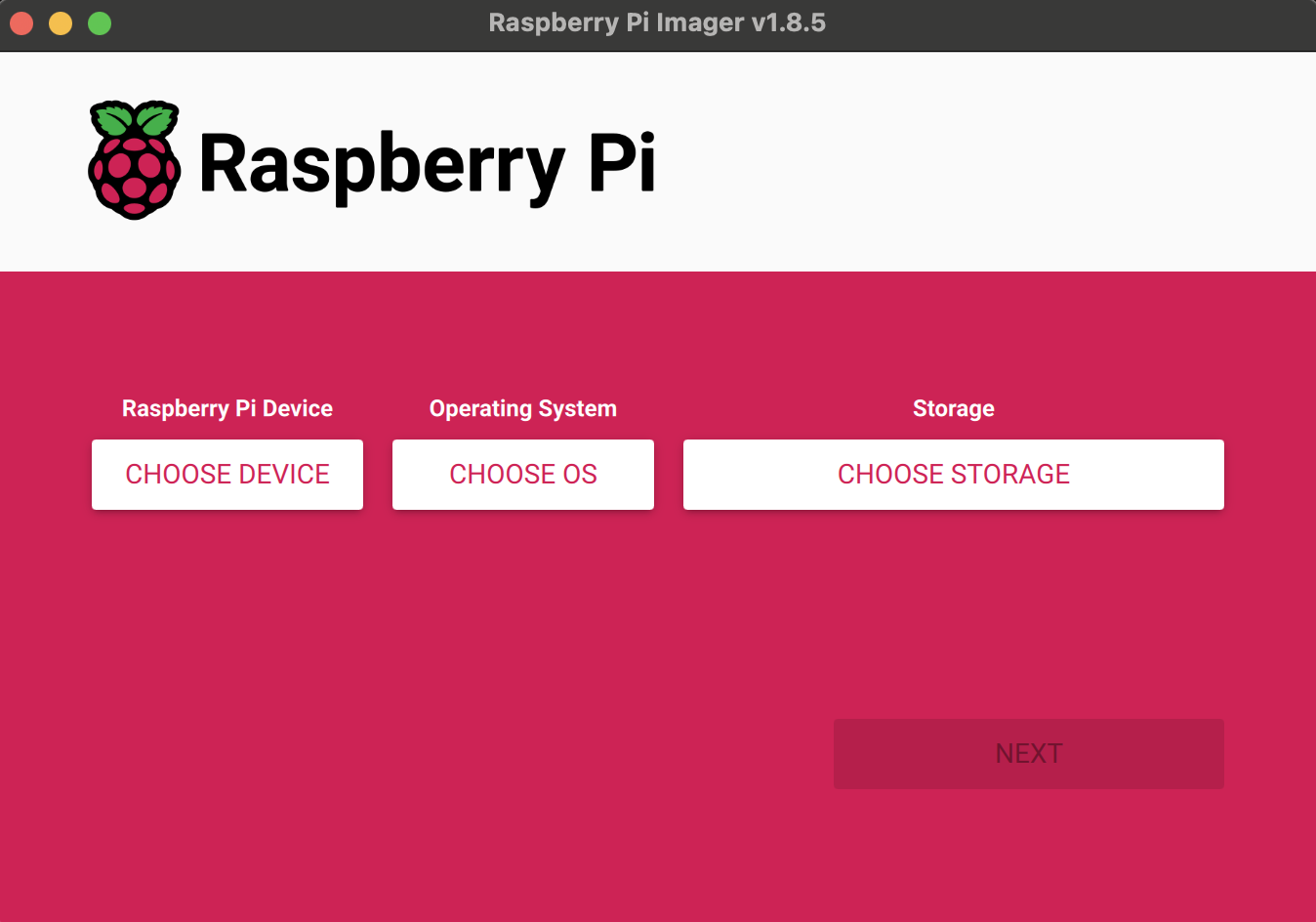
Choose Device
- Click “Choose Device” and select your Raspberry Pi model from the list.
-
Choose Operating System
- Click “Choose Operating System”.
- Select “Use custom” and then choose the downloaded OpenHome image file.
-
Choose Storage
- Click “Choose Storage” and select your SD card from the list.
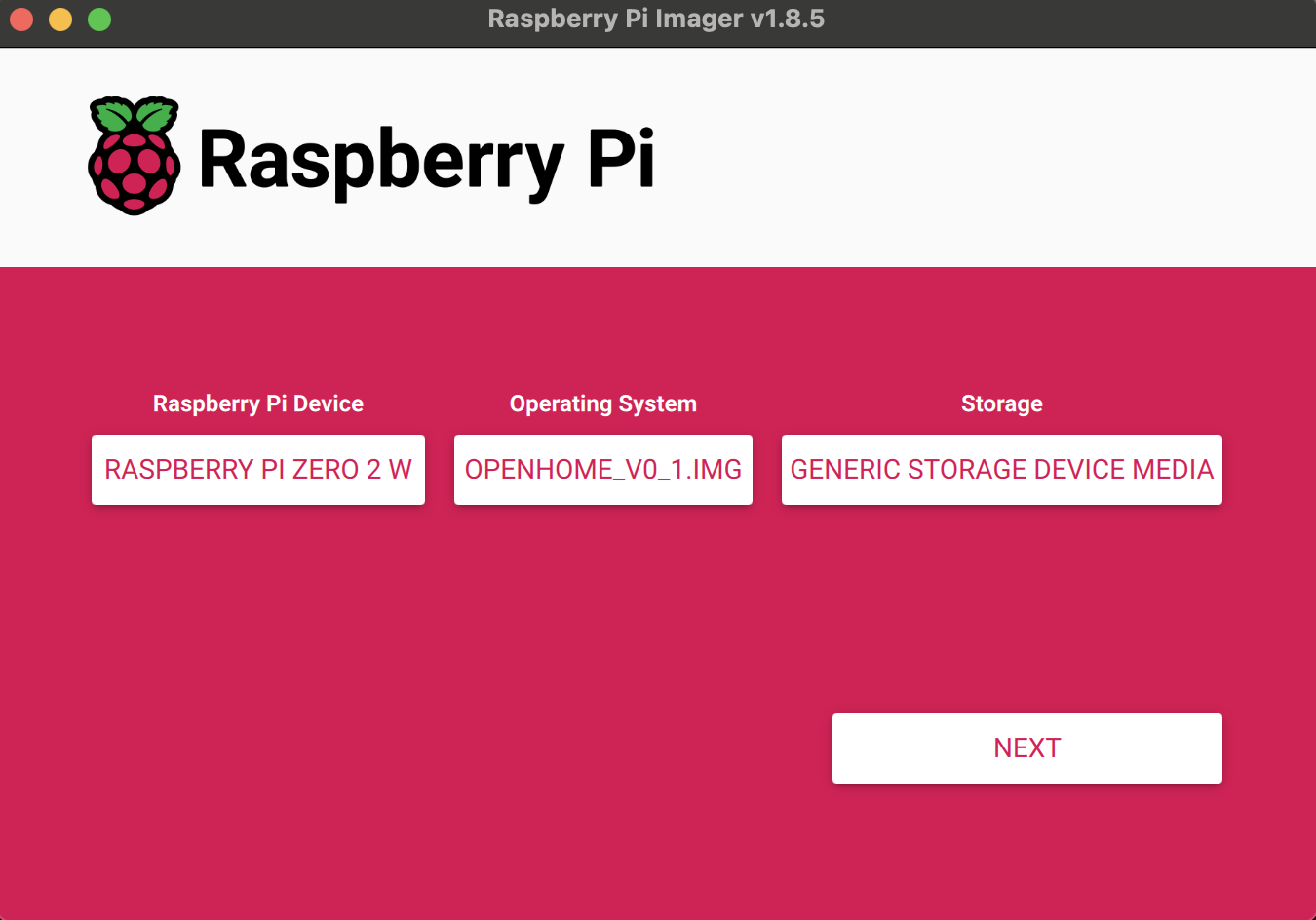
- Continue setup prompt
- Click Next.
- When prompted, click
Noand continue.
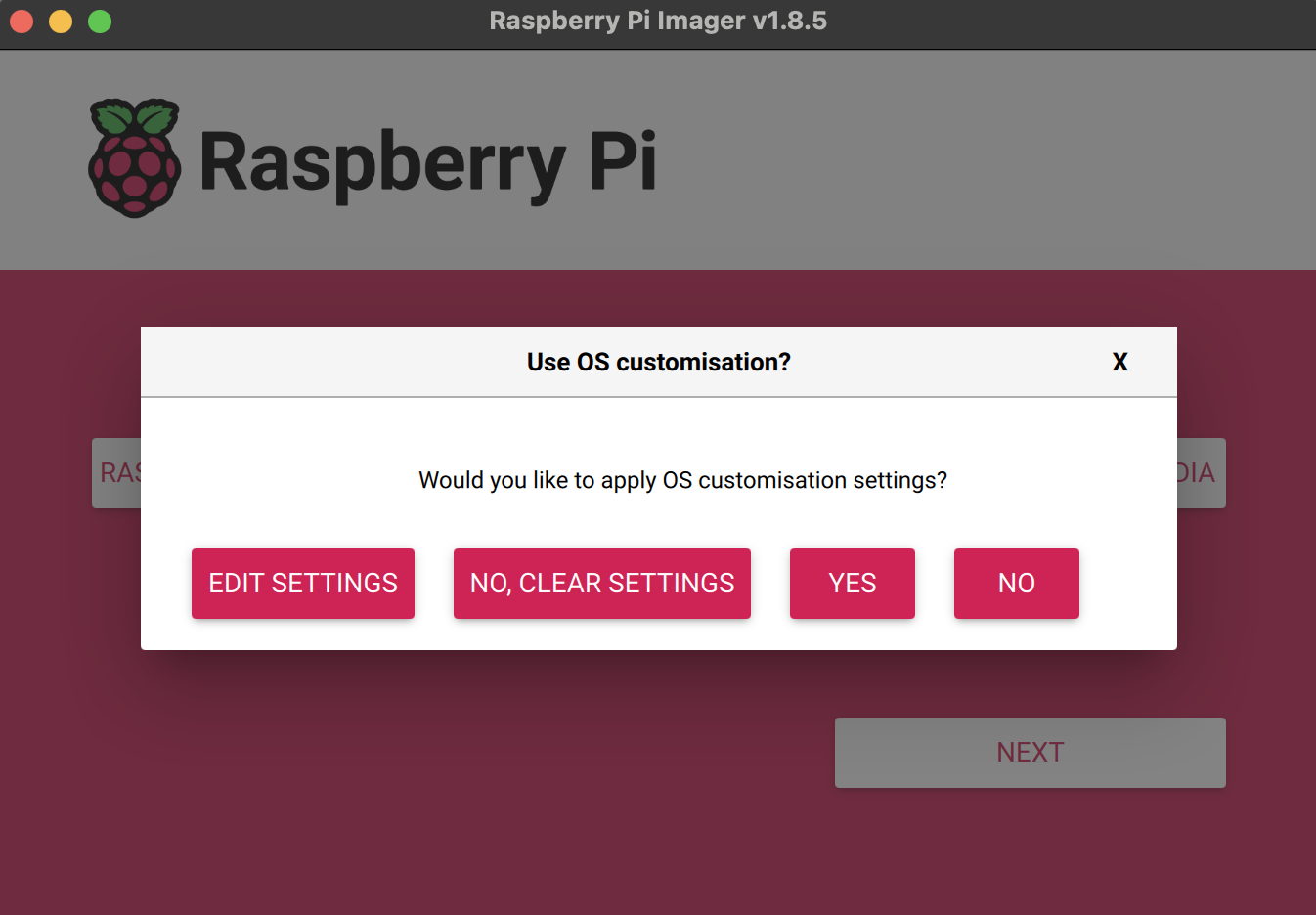
- Write the image
- Click “Write” to start burning the image to the SD card. This process may take a few minutes.
Step 3: Set Up the Raspberry Pi
-
Insert the SD card
- Once the image is written, insert the SD card into your Raspberry Pi.
-
Power on the Raspberry Pi
- Connect your Raspberry Pi to your Pi’s recommended charger and turn it on.
Step 4: Create a New User on OpenHome
- Create a new user
- If you don’t already have a user account on app.openhome.com, create one.
- Remember the email and password you use to sign up.
- If you already have an account but don’t have a password set, use the “Forgot Password” option or set a new password from the “Profile” section in settings.
Step 5: Connect to OpenHome Wi-Fi
-
Connect to OpenHome Wi-Fi
- On your device, connect to the Wi-Fi network named
OpenHome_MACADDRESS.
- On your device, connect to the Wi-Fi network named
-
Open the setup page
- The web interface should open automatically.
- If it does not, open a web browser and go to http://192.168.50.1.
-
Configure Wi-Fi and user login
- Follow the on-screen instructions to configure your Wi-Fi settings.
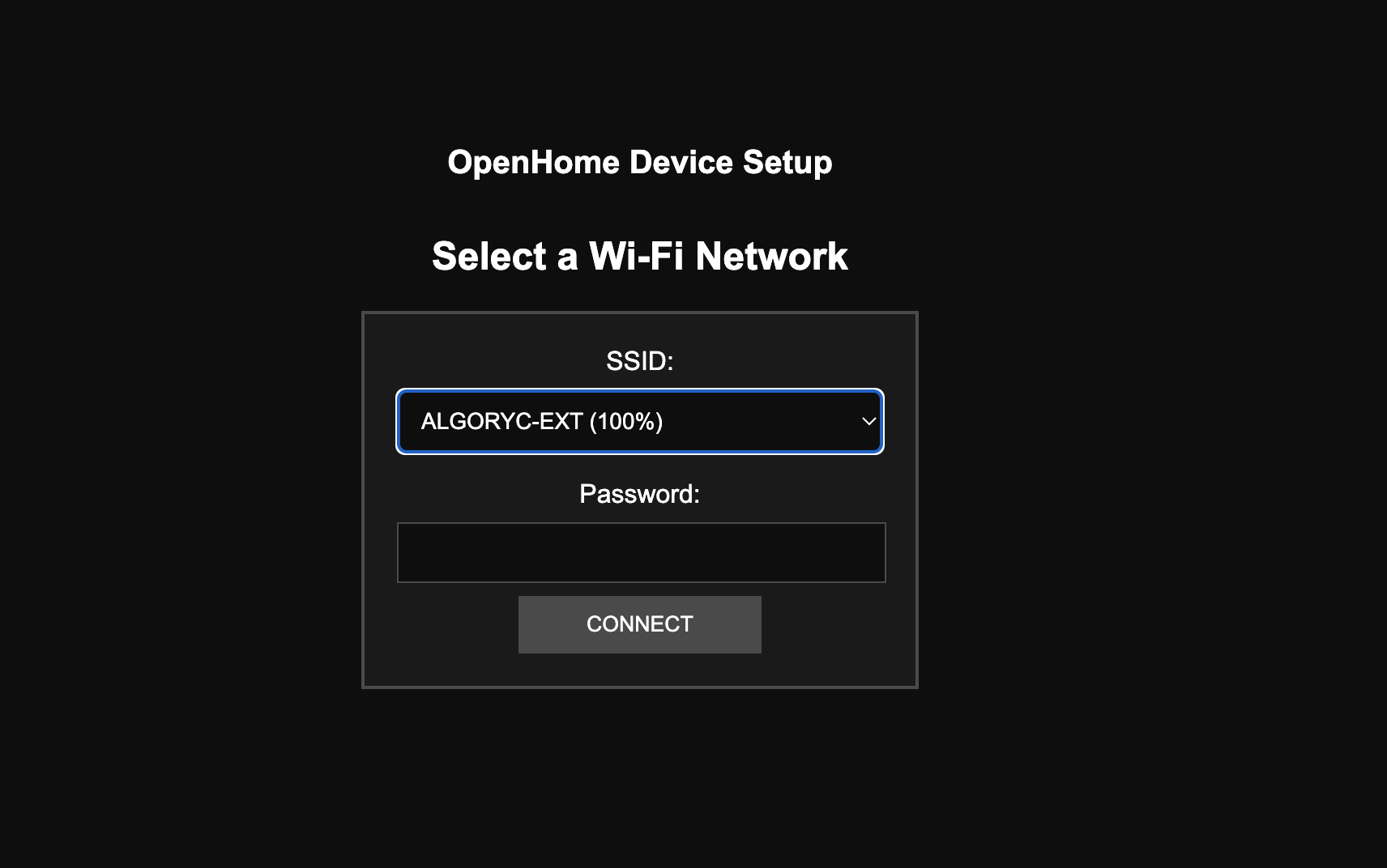
- Log in with your OpenHome user credentials.
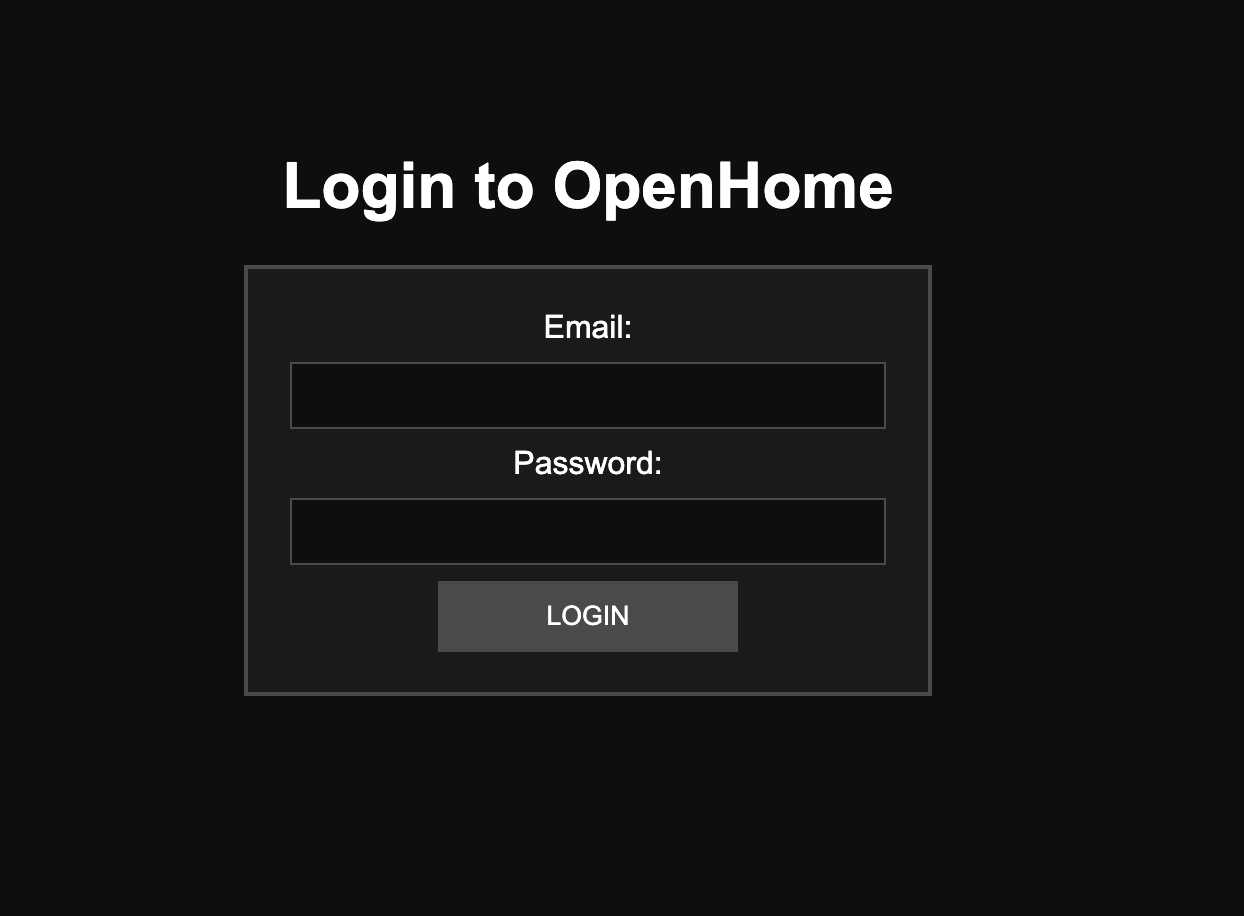
- Once configuration is complete, you should see a success status.

Step 6: Connect to Your Internet Wi-Fi
-
Disconnect from OpenHome Wi-Fi
- Once configuration is complete, disconnect from the
OpenHome_MACADDRESSWi-Fi network.
- Once configuration is complete, disconnect from the
-
Connect to your internet Wi-Fi
- Connect your device to your regular internet Wi-Fi network.
-
Log in to OpenHome
- Go to app.openhome.com and log in with the same account you used earlier.
Step 7: Configure Bluetooth Speaker
-
Access profile settings
- Navigate to “Profile” -> “Settings” and click the “DevKit” section. Your device should be connected.
-
Turn on Bluetooth
- Turn on Bluetooth on your speaker.
-
Scan for Bluetooth devices
- Click “Scan Bluetooth Devices” in the OpenHome app.
-
Connect to the speaker
- Select your Bluetooth speaker from the list.
- Ensure the profile is set to “a2dp-sink”. If it doesn’t appear, try reconnecting.
-
Connect mic to Raspberry Pi
- Connect your USB microphone to the Raspberry Pi.
- Set the default input to “analog-mono”.
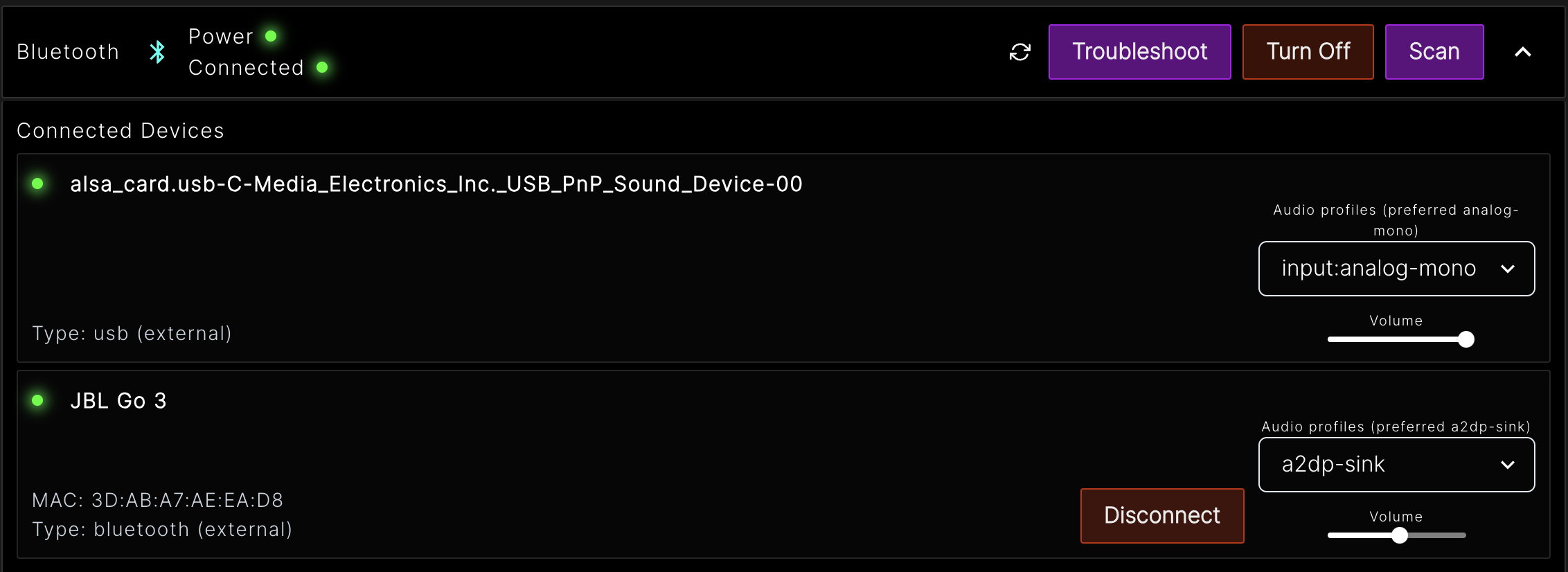
Note: You should see two connected devices: a mic and a speaker. Known limitation (current OpenHome Pi Zero image): interruption is not supported yet.
- Start the call
- The call should start automatically. If it doesn’t, click the “Restart Agent” button.